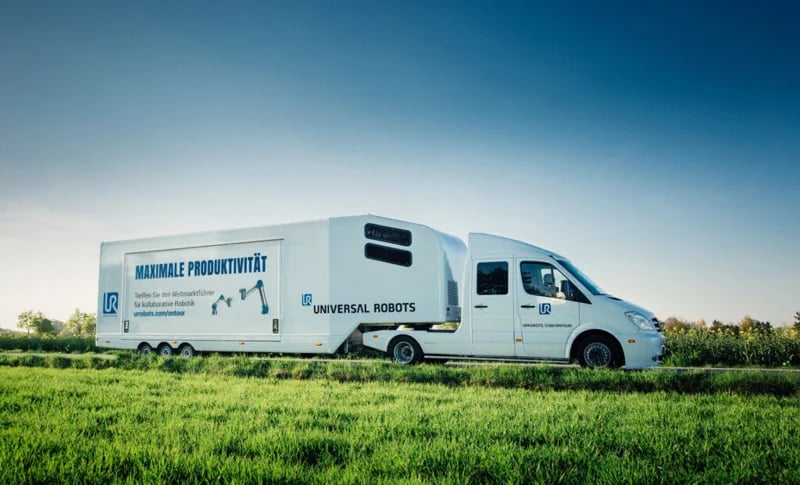
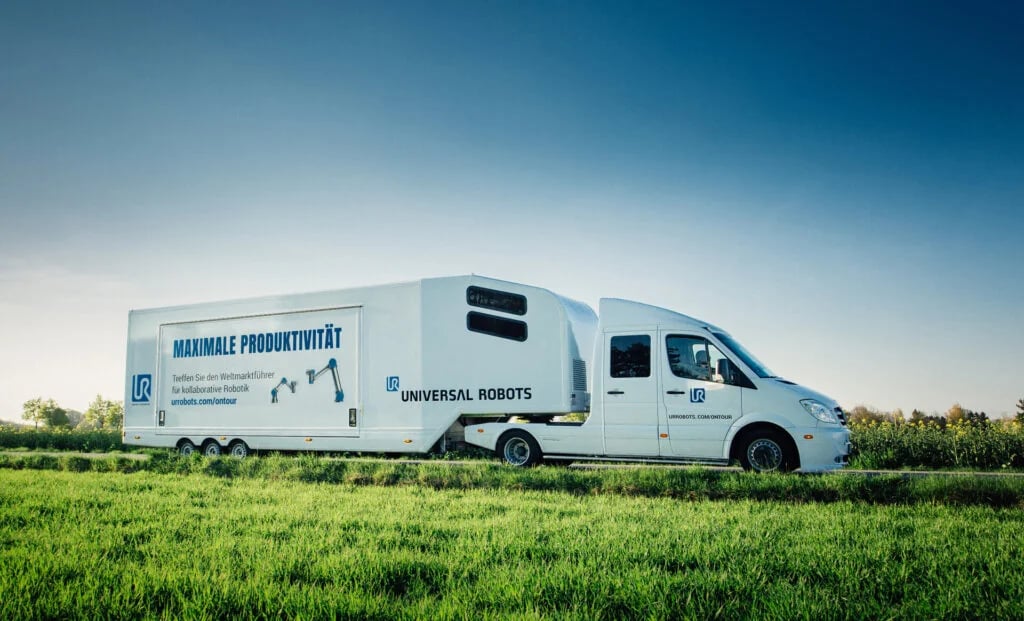
What to check when hiring or buying a mobile showroom: supplier reliability, interior height, appearance, air suspension and planning data.
Contents
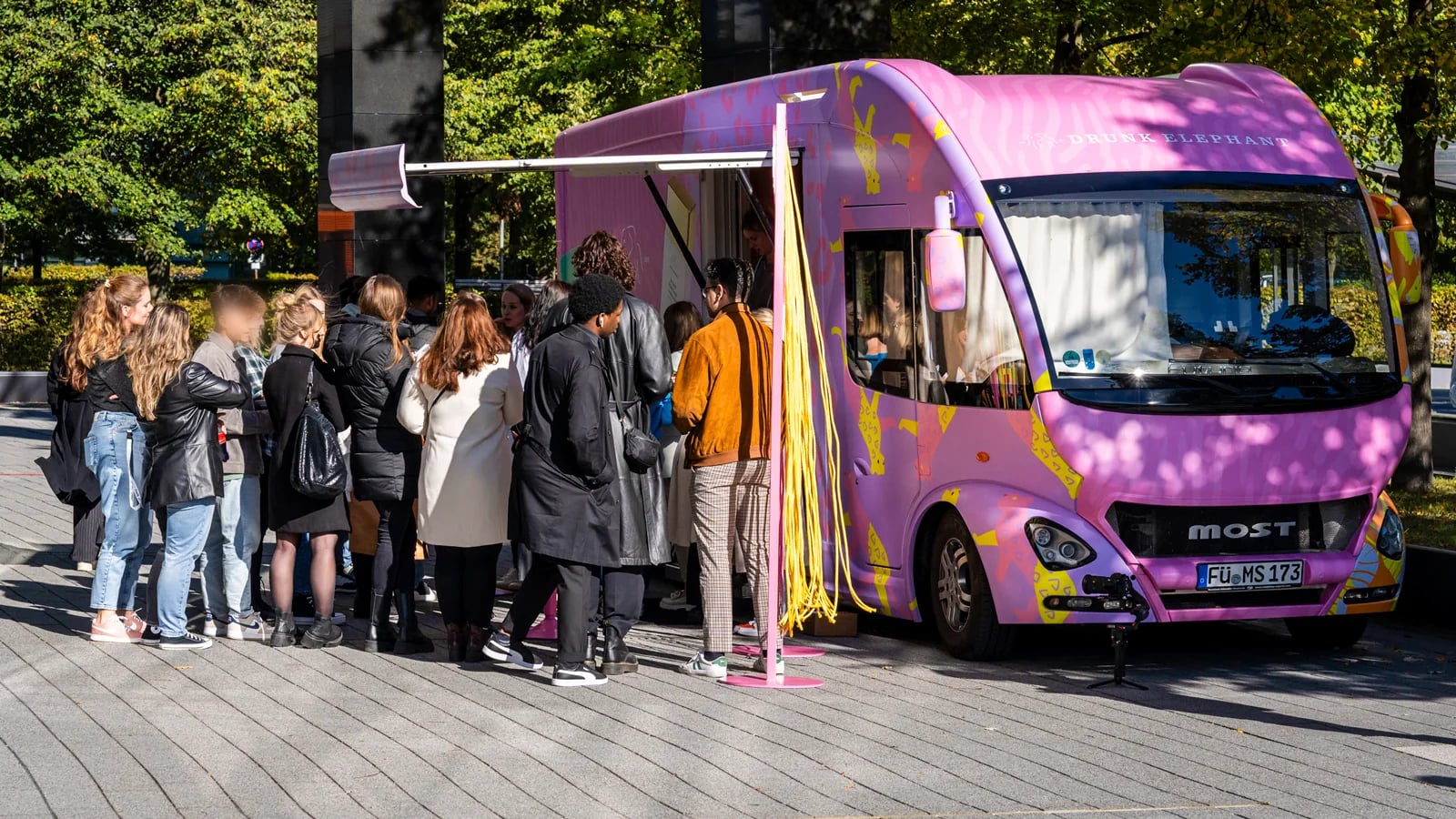
A roadshow takes your products and services to where your customers work or spend their free time. Rather than waiting for visitors, you drive your own brand presence right up to their door. Hiring a mobile showroom is an obvious way to do it.
Once the decision is made, the practical questions follow:
- Which vehicle should we use?
- How big does it need to be?
- Who will drive it?
- How will our fittings be installed?
- Which vehicle brand suits us, and what does the vehicle cost?
- Hire or buy?
More questions usually come up at the start. With a structured approach and a bit of research, though, you will soon find the right vehicle and the right supplier. The following points will help.
Reliability comes first
A roadshow vehicle is a branch on wheels and has to work wherever it goes. Before you hire or buy a mobile showroom, ask the supplier to show you convincingly how many vehicles of this type they have already built.
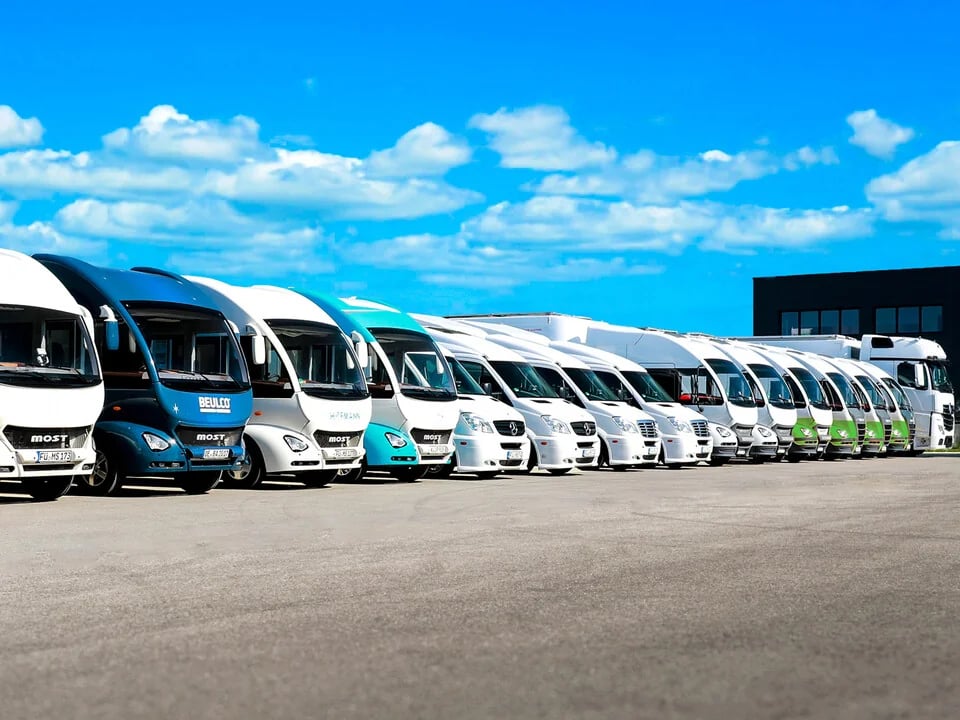
Good manufacturers of mobile showrooms and showtrucks usually have several new vehicles on site.
A supplier who cannot show you that is probably not doing well. Also check that your future supplier is financially sound. If there is a major complaint or a replacement vehicle is needed, they must actually be able to stand behind it.
Tall and wide with straight walls
To make the fit-out easy to install, let the design show to full effect and make your guests feel comfortable, look for:
- as much interior volume as possible
- straight walls all round
- an interior height of at least 2.2 metres
A word of caution: there have been several attempts to simply build the interior tall enough. The result was an ungainly vehicle that looked more like a removal van.
Delivery van or business style?
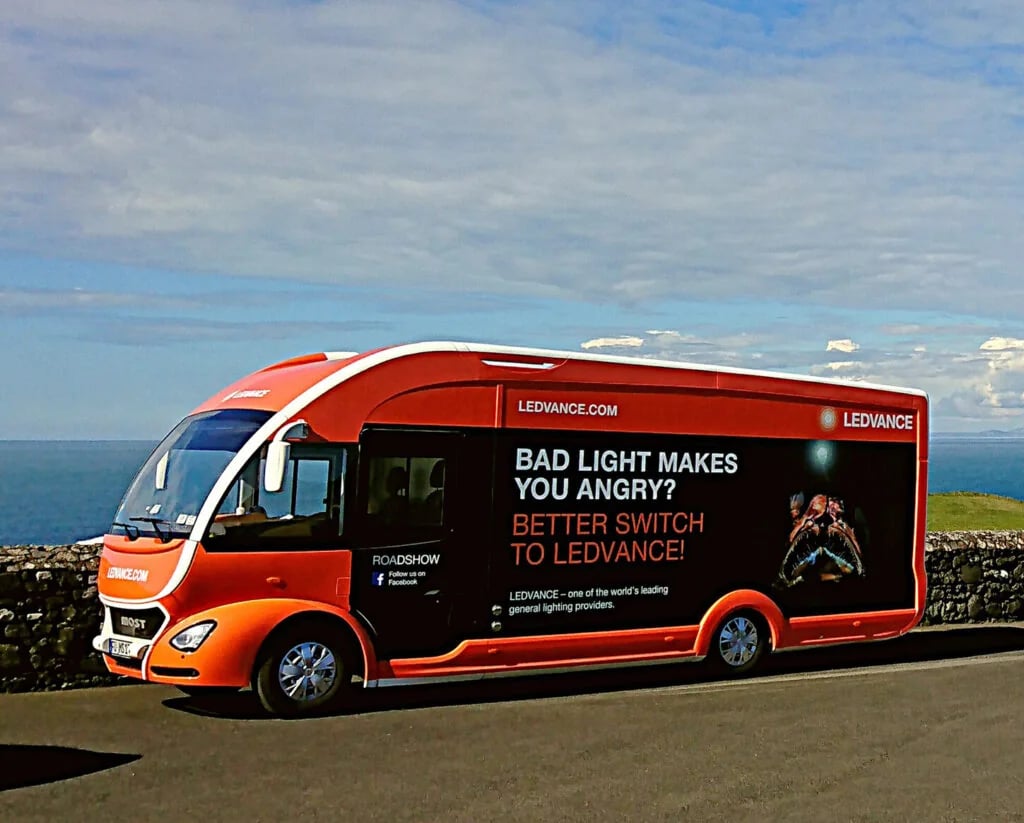
For a mobile showroom that has to be drivable on a standard car licence (category B), there is a simple rule of thumb: it carries an image, not parcels. So it needs to stand out clearly from the mass of delivery vans.
That costs more. In return, a high-quality marketing and presentation vehicle offers more on the technical side too, such as winter readiness and air suspension for transporting exhibits gently.
Speaking of exhibits: ask the supplier whether they can provide 3D data of the interior for your own planning, or ideally a complete visualisation of the future fit-out. Renderings are the best way to picture the presentation and meeting areas.
Showing strength at in-house exhibitions and events
Exhibition stands are a lot like cars: who has the nicest one, who has the biggest, who turns up in which make, which one makes people look twice?
The same applies to the exhibition stand on wheels. When wholesalers invite suppliers to their in-house exhibitions, the companies in the sector show how strong and how innovative they are, and the audience notices.
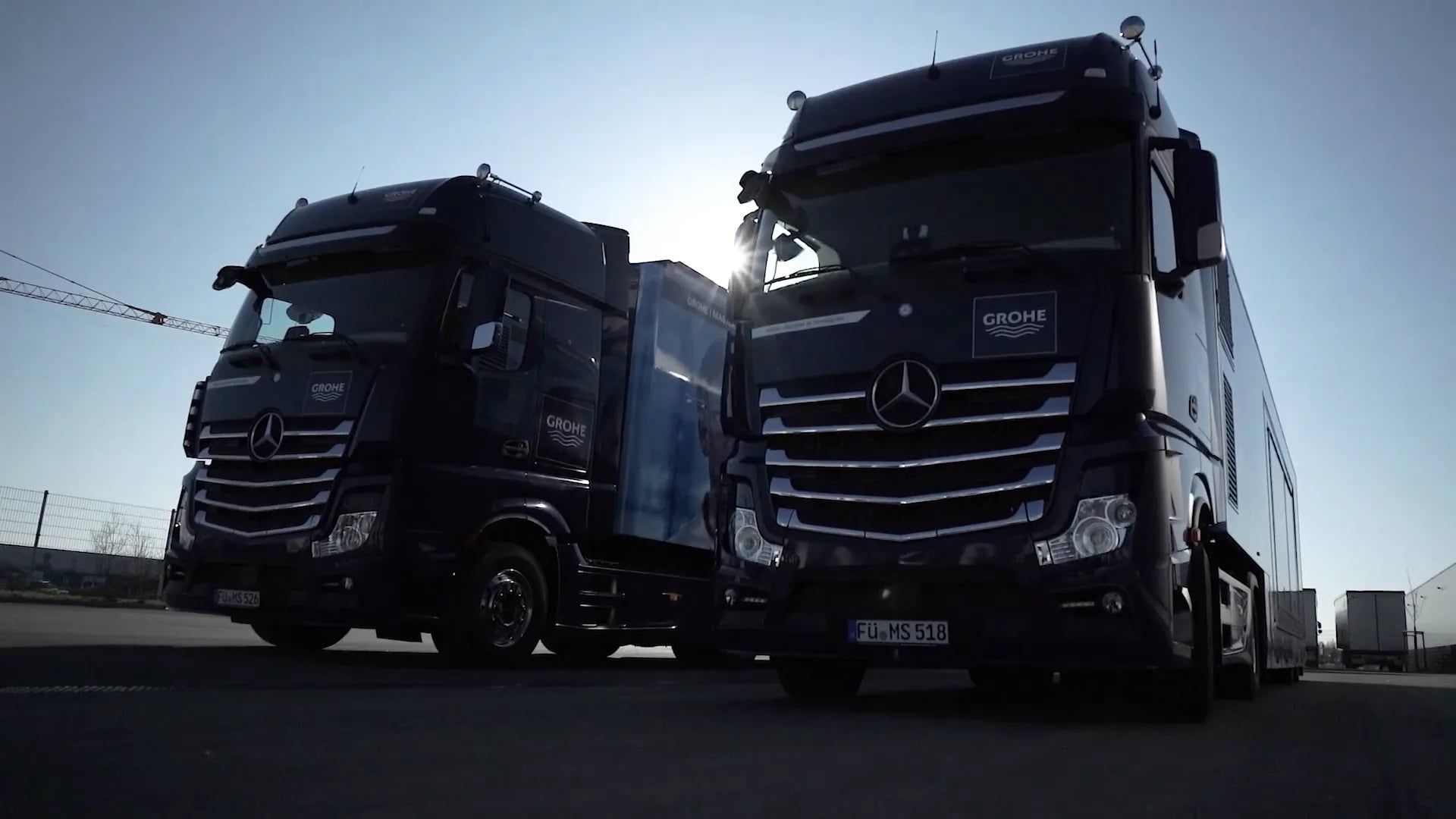
That contest also plays out through suppliers' mobile showrooms and showtrucks. Size matters less than whether your mobile stand comes across as a grey mouse or a front-runner.
Try a quick test with the vehicle you are considering: what does a passer-by see at first glance?
- a mobile showroom
- a delivery or parcel van
- a mobile butcher's van
Only the first answer is the right one. That is why you should not cut corners on the vehicle design, the interior fit-out or the lighting.